Warframe's Content Islands
Warframe's narrative is fun, beautiful, and stunning in its own way, but it has a wide variety of diseases infecting its systems.
As opposed to Destiny's narrative issues, which I covered not to long ago, Warframe suffers from a different problem, being that its narrative and gameplay experiences often contradict one another.
 |
| Image taken from warframe.com/1999 |
Warframe suffers from content islands, an issue that many have described time and time again. Content islands are sections of "content" or game experiences that are distinct from other gameplay systems. Often, these experiences have little or nothing to do with other aspects, or even the main "meat" of the game. To best explain how this impacts the main themes and idea's of Warframe, we have to describe what those themes are, which I believe can be best seen within the main quest "The New War"
The New War: How We Are All Connected.
A united front is formed between three of the major factions of the universe, Grineer, Corpus, and the Tenno, each represented by Kahl-175, Veso, and Teshin respectively.
Kahl choose to disobey his commanding officer in order to protect his "brothers," his comrades in war. In other words, his community. Veso choose to disobey his orders for similar reasons, as he wanted to help as many as possible. Finally you have Teshin, a man who chooses to help the Tenno as the Tenno helped him get freedom.
We see as three factions come together, proving the universe can be united, that we are all part of the same collective. We all live in the same world together.
But then they suffer failure.
Narmer puts several factions under his control using a device to control minds. In a sense, he has created a fake family, a fake community, lead not by free will and love but instead fear.
Following this, we see the Drifter, an alternate universe version of the character we had been playing up to this point (the operator).
The drifter unites with previous enemies in order to fight back, and they succeed.
Then we are forced to break another, toxic family in order to get the power to defeat Ballas and save the Lotus.
The Drifter defeats Ballas, the man who had seized power, and effectively reunites the solar system. The power of community, friendship and trust restored the world.
The few stragglers commanded by Narmer were slowly wiped out by Kahl and his group in a later update.
So what does this reveal about Warframe? It showcases the themes of community, aid, and the power of hope and how that can defeat any foe. Further, Ballas is a man consumed by grief, which is why he brainwashes the Lotus in the first place. It signals to the audience that grief is something that can be overcome with the right help, but if you let it consume you it can rot you.
Naturally the story goes on as any live service game does, so I could repeat the same thing I did for the Destiny blog, but instead I have a different insight. The content islands of Warframe negatively impact this story.
How Content Islands Influence Gameplay
Content Islands lead to a fractured gameplay experience. Hopefully, within a game, each system should be playing with one another, or at least working with the player to create something. At the very least, there should be something tying them together, otherwise one aspect of the game will be derided as "pointless".
Portal 2, while having the multiplayer and single player be completely separate, allows the multiplayer to function as an extension of Portal 2, with the multiplayer serving as a way to engage with the player in new and interesting formats. These are not islands as much as two levels being separate.
Or Final Fantasy's usage of minigames as a part of their systems. Final Fantasy 8's Triple Triad system is one that can be ignored throughout the game, as it is not necessary to beat the game, nor is it even required to get some of the best items. BUT there are substantial rewards for doing Triple Triad that affect the main "meat" of the game. It's not a separate system where the rewards only affect that system. Further, you can get more cards by playing other aspects of the game, such as battling. Understanding Triple Triad and its importance in the Universe of Final Fantasy 8 is necessary to understand Final Fantasy 8.
So what does Warframe do? Let's look at Railjack missions.
Railjack missions put you in charge of a giant ship where you can do missions with your friends. These missions are pretty fun at times (except the Corpus ones), and Void storms are decent at farming relics. You can also get some decent weapons and frames from it. But once you have the items you need, and the frames you want, it becomes a waste of time.
You can farm materials better in most other locations, and all of the main rewards from Railjack missions help you in doing... more Railjack missions. It makes Railjack feel like a separate part of the game that has little bearing on the rest of the game.
It's an island. One that is not worth visiting once you got what you want. DE does not seem particularly interested in refining it either, and I don't blame them.
Another example is Duviri Paradox, which suffers the same fate. Once you get the Kullervo and his weapons, why continue doing it?
At least The Circuit, the companion game mode to Duviri Paradox, gets you some decent rewards, so its worth revisiting. But otherwise, it's dead.
It feels as though the game is about jumping from different thing to different thing. Once I'm done with getting stuff from Railjack, I jump ship to Khal's missions, once I am done with that I jump ship to Duviri, and so-on and so forth.
With such little interaction between these modes, they become less and less important as the game goes on. It makes the gameplay feel fragmented, this doesn't help that what you start doing in the game is what you stay doing.
Your main interaction within the Warframe universe is engaging the planetary nodes. These nodes are the levels of the game. Once you clear the base start chart (being all the levels in the game) you unlock the Steel Path mode. The Steel Path is the endgame to Warframe, with all of the big and final farms being towards the end of Steel Path.
Imagine, if you will, one main island, where you do all of the main stuff you actually care about, and then separate islands, where you can only take back a little bit, so each island's progression is independent from one another. You'd end up not wanting to go to the other islands, what's the point if the progression doesn't carry onto the main island.
And so, most Warframe players, including myself, stick to doing what they've always done, farm for new frames and weapons using the preestablished mission nodes. Why bother with Railjack once I got my parts? It's faster and more fun to stick to the normal mission structure.
How Does This Affect the Story?
One of the themes of Warframe is the impact of bonds and how they can cause waves across the Universe. The New War's quest showcases this perfectly, allowing the people of the universe to come together. Further, it requires you to go out of your way to acquire a railjack and a necromech, which are both important tools that you only received through the help of others.
But this very same thing is its downfall. The amount of players I personally know who have not done The New War because it requires them to get a necromech and a railjack is astounding. Because both of these things are locked behind content islands, players feel no drive to rush out and acquire them.
A railjack is not like a cool gun, a cool gun will be able to be used anywhere in Warframe, a railjack is railroaded into a specific piece of content forever. Necromechs are forever stuck in the world of the open world portions of Warframe, which is a portion of the game most players hate playing.
The feeling of using tools across the universe and allying with your old friends is defeated, because these parts of the game are so disconnected. I fear that this is only going to get worse.
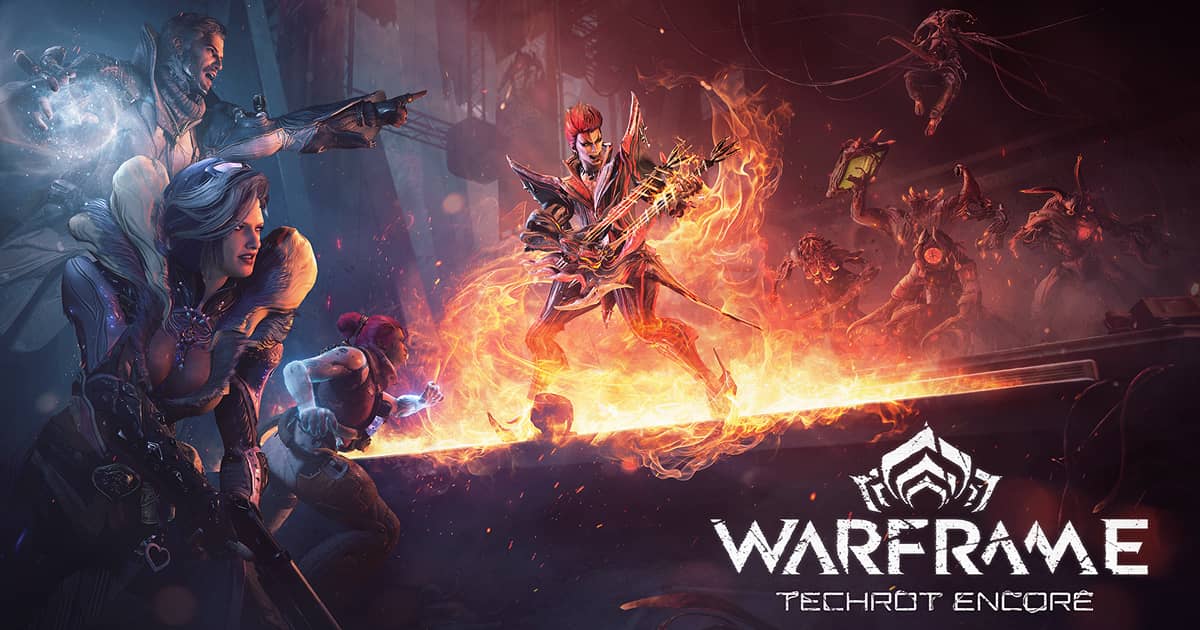
Currently, Warframe is exploring the world of Warframe 1999, which is a fun trot filled with nostalgia and new friends. With the drifter being apart of the story, we see as our player character discusses their friends and tools, as well as their past. We get to see a micro idea of these themes play out. But, with Warframe only jumping into 1999 more and more, I wonder what will become of it in 2, 3, and 5 years. Will the community forget about it? Will it become just another content islands, or will the developers finally free themselves of the baggage that they have been holding onto for so long?
I can only hope for an interconnected world where your actions in one aspect of the story can be felt across the Universe. That is what I believe the story of Warframe deserves.
How do Content Islands affect Pacing?
Content Islands are not that bad for existing players, which is why they get made. Existing players love having a new area to explore and new things to collect. Even if it is separate, for a period of time, it allows the player to enjoy that island in its entirety. The old player does not need it to exist within the context of the wider world, they understand the world and are just excited for a new thing to do.
New players on the other hand are hurt. They ask, "Whats the point?" and the Veteran replies "oh it is like its own gameplay cycle." And so the new player replies "why am I doing this instead of the actual game?" and then the Veteran replies "oh you need to so you can get back to the main game."
And thus we have to ask, what is the point? It does not tie into the game's themes of community, family, and triumph, and it does not incentivize the player to continue playing it. It only serves the Veteran who does not care what they get, they just need a new thing to do.
So it becomes the Developer's job to create an extension of the world, that does not feel too disconnected, while not being mere repetition of the old. The veteran wants something new, and the new player wants something stable. AND ME THE CRITIC WANTS SOMETHING TO ANALYZE!
What About the live service part of Warframe?
The live service part obviously contributes to the epidemic of content islands. Soon that archipelago will grow more and more which will only hurt the games story and themes, but more importantly what does that do for my role as a critic?
My biggest fear with live service games and the role of critics is that we will be stuck in a never ending cycle of advising what the developers *should* do rather then analyze the game as a piece of art in its current state.
I have fallen into this trap with this article.
I say "Warframe should handle it's content islands," to which they handle it. Then I say they need to do y, to which they do y. I'm stuck in the role as advisor, which while important, is not the critics job.
When I finish a game like Silent Hill, I get into the role as critic easily. I start picking apart the themes, ideas, characters, plot, and so-on, not to look at what it could've done better, but to examine it as it is. I accept that this is the final product, the one that I am engaging with. There is no "it should do this," only "this is it."
With live service games, I do not know if you get to avoid that. As the game is forever stuck in the world of "not quite done yet" we are always going to end up in the position of "well I think it should do x."
Hell look at discussions of Minecraft, notice how they are always called "retrospectives" or end up discussing, primarily, the older bits of it? That's because it is easier to discuss a game, a piece of art, after it is done. Otherwise you are taking part in the act of creation.
Or perhaps that's always been the case. We as the audience have never been passive onlookers at the piece of work, instead we create something new through our perspectives. Is a live service game any different? Is it not just an extension of that idea?
I... don't know yet. What do y'all think?

Comments
Post a Comment